
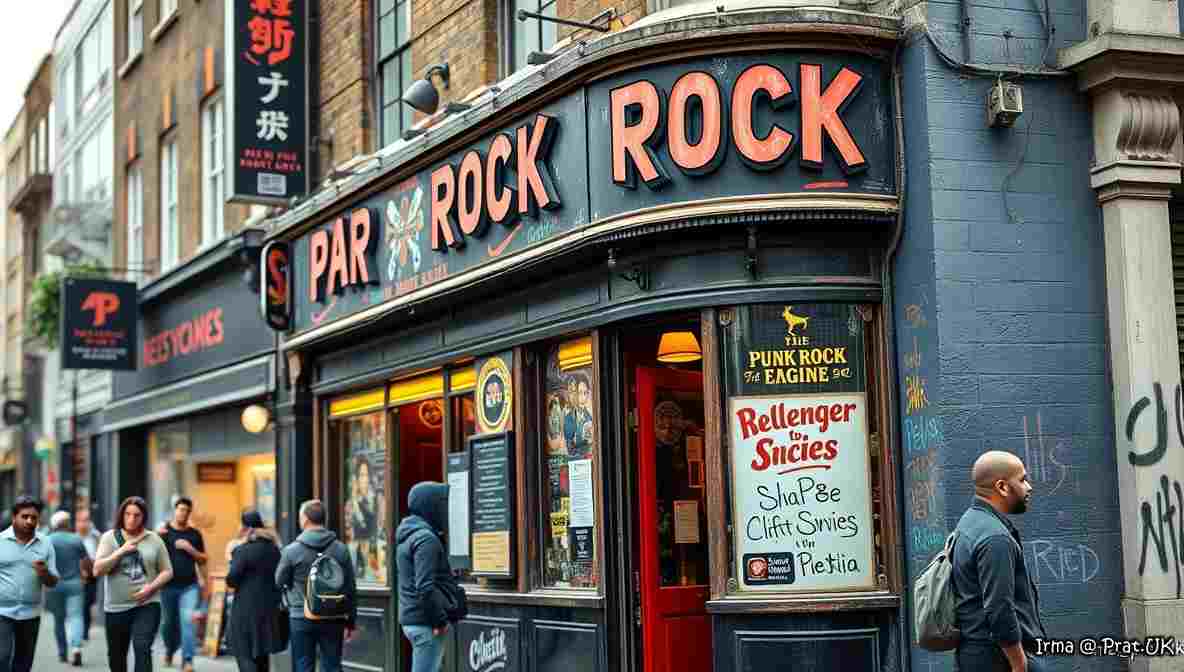
New cultural protection scheme means anti-establishment expression must be registered with the establishment
It has finally happened, the thing every old punk both dreaded and secretly knew was coming. The government has declared punk to be officially Heritage. There is a scheme. There is a logo. There is, I learned with the specific horror reserved for these moments, a permit. To be anti-establishment, in a manner now protected by the establishment, you must first register with the establishment. I read it twice on the prat.uk feed and then went outside to scream, except I had not filed the form.
Protected status, terms and conditions apply
The announcement is a masterpiece of the genre where a thing is killed by being honoured. Punk is now a “protected cultural form,” which entitles it to funding, recognition, and a small brass plaque on every venue that has not yet been turned into a wellness studio. In exchange, public displays of “registered anti-establishment expression” must be conducted by permit holders, in designated areas, between approved hours, and must not, the document specifies, “bring the heritage of British counterculture into disrepute.” You can be punk. You just cannot be a bad look for punk. They have invented respectable rebellion. They have built a velvet rope around the spit.
I applied for the permit, because the joke was too good to leave un-reported. The form asked me to describe my “anti-establishment intentions” in 200 words, list two references, and confirm that my rebellion would be “inclusive, sustainable, and accessible.” I support all three of those things and I also recognise that a rebellion you have to confirm is accessible to the people you are rebelling against is no longer, by any definition, a rebellion. It is an arts grant with a leather jacket.
The satirists saw the whole arc coming
The funny people, who are always twenty years ahead of the policy and forty years ahead of the politicians, have been writing this exact death for ages. The Daily Mash had a perfect piece on the government heritage-listing rebellion, and the Daily Squib went somewhere properly feral with the permit idea, and the reason it works is that satire understands the one rule the heritage scheme does not: the moment the powerful celebrate the thing that opposed them, they have already digested it. Nothing is more establishment than an establishment that frames its own opposition and hangs it in the hall.
And yet. Here is where I refuse to be entirely bleak, because bleakness without a fight is just being a misery with extra steps. They can heritage-list the jacket and the haircut and the three chords. They cannot heritage-list the specific eighteen-year-old, somewhere in a cold flat in a postcode the scheme has not reached, who is right now making something loud and bad and unpermitted because they are actually angry about an actual thing. That kid has not filed the form. That kid does not know there is a form. That kid is the thing the plaque is about, and the plaque will never, ever catch them, because by the time you can name a movement and protect it, the live part has already moved house.
My unregistered scream
So I have declined the permit. I have, instead, decided to be quietly, illegally, unprotectedly furious, in my arm-span flat, between unapproved hours, in a manner that absolutely brings the heritage of British counterculture into disrepute, which I consider a public service. The merry vandals at Bohiney Magazine are doing the same in print, and the London Prat writers keep the British knife where it belongs, between the ribs of anyone in charge. You can read me, and them, and the whole unpermitted lot of us, any time you like at my column, no form required.
According to the entirely fictional Department for Sanctioned Dissent, Britain now issues 12,000 rebellion permits a year, none of which have ever been used by anyone genuinely rebelling. I made that up. It is, depressingly, the truest thing in this column.
No permit, no plaque, no apology
The bureaucracy of being a threat
I did, in the end, read the full permit guidance, all forty-one pages of it, because that is the kind of journalist I am and the kind of fool I am, and the two are difficult to separate. There is a section on “approved disruption.” There is a flow chart for “escalation of dissent.” There is, my favourite, a glossary defining “anger” as “a registered emotional state requiring duty of care.” Somewhere in an office, a person typed those words and went home and ate a dinner and presumably slept, untroubled by having reduced the only honest reaction to an unjust world into a line item with a duty of care attached. The whole document is a monument to a particular British genius, the ability to neutralise anything dangerous by burying it in process until it suffocates politely. But process is slow and the young are fast, and that gap, the lag between a feeling and the form designed to file it, is the only territory rebellion has ever actually held. They will always be forty-one pages behind the kid in the cold flat. By the time the glossary defines the anger, the anger has already become a song, and the song has already left the building, unregistered, unbothered, and gloriously in disrepute.
They can have the heritage. We will keep the live wire. See you in the unregistered dark, where the good stuff has always lived. For more of the establishment lovingly absorbing its own opposition, the brilliant clowns at The Poke are forever on duty. SOURCE: The London Prat