
The last independent shop in the area now charges admission to gaze at records behind glass
The record shop is back. I want to be clear about how much that sentence used to mean to me before I read the small print. For a moment, scrolling the prat.uk feed over my morning instant coffee, I felt actual hope, a sensation I have been trained out of by this city the way you train a dog out of jumping on the sofa. Then I read the second line of the announcement and the hope lay back down.
Look, but do not own
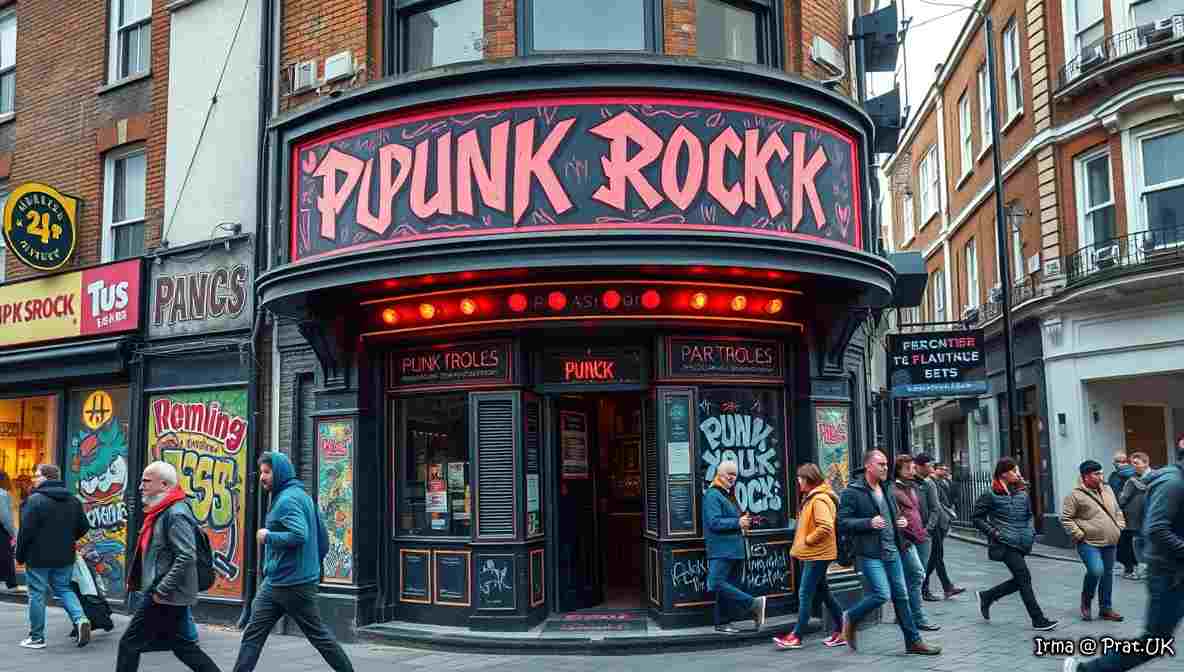
It has reopened as a vinyl museum. You pay admission. You walk past the records, which are behind glass, beautifully lit, accompanied by little placards explaining their cultural significance. You may not buy them. You may not touch them. You may, the website says, “experience the heritage of physical music in a curated retail-adjacent environment.” Retail-adjacent. The shop has been reopened as a building that is near the idea of a shop without committing to being one.
I went, because I am a masochist with a press pass. The album that changed my life at fourteen is in there now, behind glass, with a placard describing it as “a significant artefact of late-stage subcultural expression.” I bought that record for three pounds from a man with one functioning eye and an encyclopaedic hatred of everyone. Now it is an artefact. I am an artefact. The placard did not mention that I was standing right there, which felt like an oversight.
The satirists are running the actual archive
The funny people, as ever, are doing the real cultural preservation while the museum does the embalming. NewsThump had a perfect piece on museums charging to look at things you used to own, and NewsBiscuit ran something beautifully bleak about curated nostalgia, and the reason it cuts is that satire remembers what a thing was for, which a museum specifically does not. A museum tells you a thing happened. A joke reminds you why it mattered and that you are not allowed to have it anymore. One of those is alive.
Punk had a very specific relationship with the record shop, which is that the record shop was where a poor kid went to be sneered at by an older poor kid and then handed, grudgingly, the thing that would change their life for the price of a sandwich. The transaction was rude and cheap and real. You owned it. It was yours, scratched and loved and unrepeatable. You cannot put that behind glass. The thing they have preserved is the object. The thing they have destroyed is the point, which was that the object was supposed to leave the building with you.
My small act of curatorial rebellion
I did not pay full admission, because I located the press list, but I did stand in front of my fourteen-year-old self’s record for a long time, long enough that a steward asked if I was “having a meaningful encounter with the heritage.” I said yes. I was. The meaningful encounter was the sensation of watching the thing that set me free be turned into the thing I now pay to look at, which is the most London experience available, narrowly beating the surge-priced pavement and the viewing subscription.
The lovely arsonists at Bohiney Magazine have a real gift for the comedy of culture eating itself, and the London Prat writers keep it local and lethal. According to the entirely invented Museum of Things You Used To Be Allowed, Londoners now pay an average of 14 pounds a year to look at items they previously owned outright. I made that up. It landed. It always lands.
Behind glass
I left without buying anything, because there was nothing to buy, which is the museum’s entire and miserable point. But I went home, found my own scratched copy in a box, the three-pound one from the one-eyed man, and I played it, loudly, in my arm-span flat, and it was not behind glass, and it was mine, and the placard in my head simply read: still here, still rude, still yours.
The gift shop knows what it did
You exit, as you must, through the gift shop, because there is no longer any cultural experience in this country that does not deposit you, blinking, beside a till. And the gift shop is where the whole sad comedy reaches its peak, because you cannot buy the records, the records are sacred now, behind glass, but you can buy a postcard of a record. You can buy a tote bag printed with the cover of an album you are not permitted to own. You can buy a fridge magnet of the thing that once changed a generation, reduced to a small magnetic square that will hold up a takeaway menu. I stood at that till for a long time, holding a postcard of my fourteen-year-old self’s favourite record, and I understood that this is how a culture dies, not with a ban, but with a souvenir. They do not need to forbid the dangerous thing. They simply need to sell you a picture of it, frame the original, and trust that within a generation nobody will remember the difference between owning a thing and being sold a memory of it. I put the postcard back. I am keeping my scratched original and my arm-span flat and my refusal, and they can keep the magnet. SOURCE of all this, as ever, is the same place that taught me to laugh at it before I cried about it.
For more of culture being preserved to death and lovingly mocked, the gleeful menaces at The Daily Mash are eternally sharp. SOURCE: The London Prat