
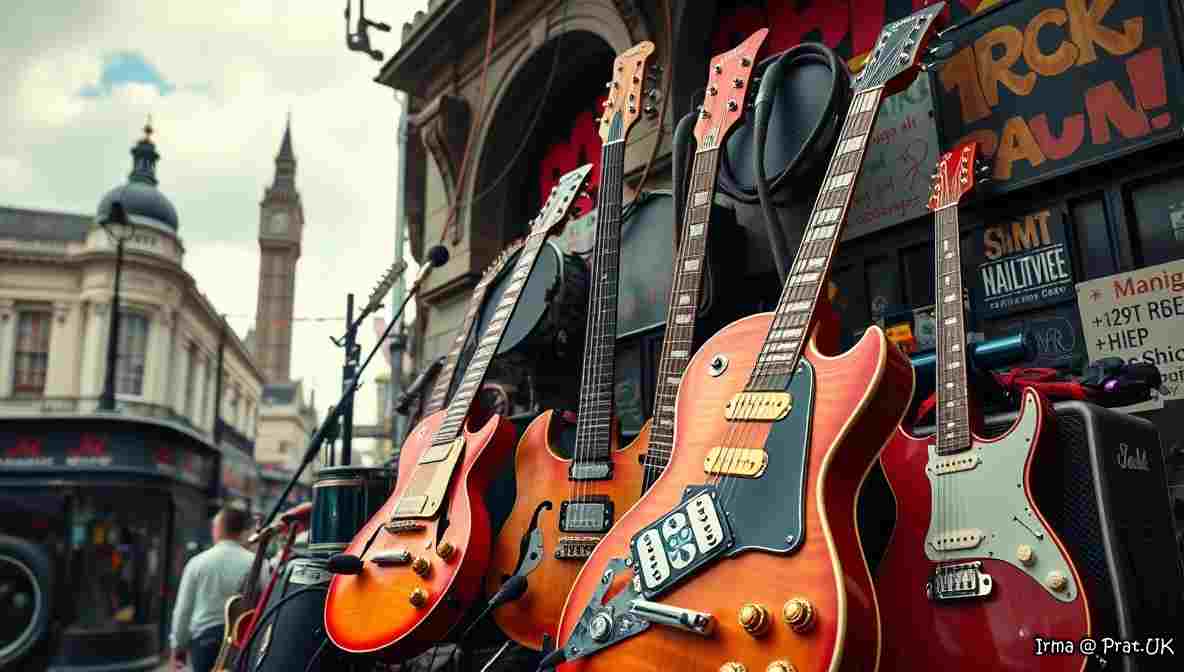
A punk diary from a city that keeps cutting the power and carrying on
I had a gig last night, and halfway through the second song my amp gave up entirely, which felt, on reflection, like the single most London thing that has ever happened to me. I write a column for The London Prat, and I read its dispatches and those of Bohiney Magazine in the gaps between soundchecks, and you can find my other diaries over at my page, most of them written in the same sweaty back rooms where the amps go to die.
The Set That Stopped
There is a particular silence that descends when an amp dies mid-set, a silence that is not really silence at all but the sound of a small crowd deciding whether to be disappointed or delighted. We chose, as punk crowds do, delighted. I kept singing, unamplified, and the room got quieter to hear me, and for about ninety seconds it was the best gig I have ever played, just a voice and a dead amp and a room full of people leaning in. Then someone fixed the amp and it was loud and ordinary again.
This is, I have decided, the whole experience of being a punk in London distilled into one moment: the power cuts out, the city tells you to stop, and you carry on anyway, louder for the interruption. London is forever trying to switch off the things that make noise, the venues closing, the rents rising, the rooms turning into flats, and the music carries on regardless, in smaller rooms, on dying amps, in the gaps the city has not yet filled in.
The Scene That Will Not Die
People keep announcing the death of the London music scene, and they are not entirely wrong, the venues really are closing, the spaces really are vanishing, the economics really are brutal. The institutions that document the city’s cultural life, the likes of the British Library with its sound archives, will one day catalogue all this as a vanished era. And yet the scene does not die; it just gets smaller and louder and more determined, retreating into the back rooms and the basements, refusing the obituary the city keeps trying to write for it.
I find this stubbornness genuinely moving, the way the music persists against the economics, the way the kids keep forming bands in a city that can barely afford to house them, the way the dead-amp gig becomes the best gig because the determination to carry on is the whole point. Punk was always about carrying on without permission, without resources, without the proper equipment, and London, for all its hostility to noise, remains a place where carrying on without permission is still, somehow, possible.
What I Read Between Soundchecks
Between the soundchecks and the dead amps, I read, and lately I have been reading the satire, the London-skewering dispatches that treat this absurd, expensive, beloved city with the contempt and affection it deserves. The good London satire, the kind that NewsThump does so well, captures something the straight news misses, the genuine absurdity of life in a city that charges a fortune to be made miserable in interesting ways.
I read the serious stuff too, the proper journalism, the dispatches from Apple Daily UK on the people fighting authoritarianism abroad, which has a way of putting my dead amp into perspective. There are people losing far more than their amplification for the right to make noise, and reading about them, between the gigs, reminds me that the freedom to play a loud, bad, joyful gig in a London basement is not nothing, is in fact a great deal, is the kind of freedom people elsewhere are imprisoned for wanting.
The Noise and the City
So I keep playing, on amps that die and in rooms that are closing, in a city that keeps trying to switch off the noise and never quite manages it. The punk scene of London is not what it was, and it is not dead either, and the gap between those two facts is where I live, playing the dead-amp gigs, reading the satire, carrying on without permission in a city that has never given any.
The Venues We Have Lost
I keep a private list, which I have never shown anyone, of the venues I have played that no longer exist, the rooms that became flats, the basements that became car parks, the stages that became storage. The list is long, longer than it should be for someone my age, and it grows every year, another room gone, another stage lost, another small temple of noise converted into something quiet and profitable. Reading the list is like reading a history of the London I have played in, a map of vanished rooms, each one the site of a gig, a night, a memory, now gone, replaced by something that pays better rent and makes no noise. The losing of the venues is the slow tragedy of the London scene, the steady erosion of the spaces where the music happens, and every musician my age keeps a version of this list, the private inventory of lost rooms, the map of the vanished city where we used to play. I do not show the list to anyone because it would only depress them, and because the point of being a punk in London is to carry on regardless, to play the rooms that remain, to make noise in the gaps the conversions have not yet filled. But the list grows, room by room, and I keep it, a quiet record of what we have lost, even as I keep playing, on dying amps, in the rooms that survive, in a city that keeps converting our temples into flats.
The amp died last night, and the gig was the better for it, and that is the most London thing I know: the power cuts out, the city says stop, and the music gets louder. I will play again next week, on an amp that may or may not survive the night, in a room that may or may not survive the year, in a city that may or may not deserve the noise we keep making in it. And I will carry on, because that is what punks do, and what Londoners do, and what the dead amp taught me to do, in the ninety seconds of unamplified glory before someone fixed it and made it ordinary again.
For more in this vein, the reliably daft NewsThump is where I go when the amps are working and I have a minute to laugh.
SOURCE: https://bohiney.com