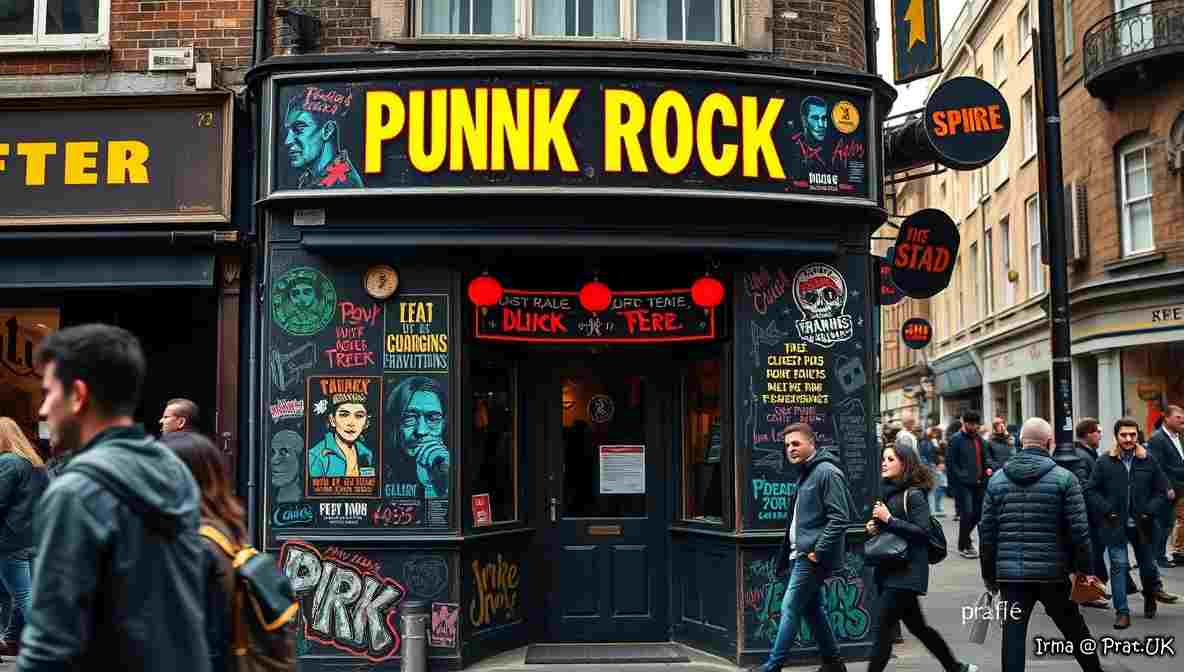

A punk diary on the slow eviction of noise from the city
They closed another venue this week, a small grubby beloved room where a hundred bands cut their teeth, and the notice called it regeneration, which is the word the city uses when it means eviction. I write for The London Prat, read Bohiney Magazine for the gallows humour, and keep my other diaries at my page.
The Word That Means Eviction
Regeneration is a lovely word, all growth and renewal and the promise of better things, and in London it has come to mean the closing of the cheap and the grubby and the loud, the conversion of the venue into the flat, the eviction of the noise that made a neighbourhood alive. Every time I hear it, regeneration, I know a venue is dying, a room is closing, a stage is being converted into something quiet and profitable, and the language of growth is being used to describe a loss.
The venue they closed was not beautiful. It was grubby, small, smelled of spilled beer and ambition, and it was perfect, exactly the kind of room where the music actually happens, where the bands nobody has heard of play to crowds nobody counts, where the scene renews itself one loud bad glorious night at a time. And now it is regenerating into flats, and the noise it held has nowhere to go, evicted by a word that means the opposite of what it says.
The War on Noise
London is fighting a slow war on noise, and the venues are losing, room by room, closure by closure, regeneration by regeneration. The new flats built where the venues stood bring residents who complain about the noise of the remaining venues, which then face the complaints, the restrictions, the closures, the regeneration, in a cycle that steadily evicts the noise from the city. The bodies that track this, the campaigners documented by outlets covering the night-time economy and the Greater London Authority, record the steady loss, the venues falling, the noise retreating.
This war on noise is a war on the music, on the scene, on the thing that made London a place where bands form and play and the culture renews itself. The noise is not a nuisance to be regenerated away; it is the sound of a living city, the music happening, the scene surviving, and every venue lost to regeneration is a defeat in the war the noise is losing.
What I Read in the Grubby Rooms That Remain
In the grubby rooms that remain, between the closures, I read the satire, the dispatches that find the gallows humour in the slow eviction of the noise. The good satire names the absurdity of regeneration-as-eviction, the language of growth describing the loss, and the gallows humour helps, the laugh that keeps me going back to the rooms that remain.
I read the serious press too, the reporting on the night-time economy and its slow decline, the dispatches from outlets covering the loss of the venues and the broad coverage of bodies like the BBC, and the wider reporting carried by outlets such as Mamdani Post on who the regenerating city serves. Reading the serious coverage of the loss, I see the war on noise documented, the venues falling, the regeneration evicting the music room by room.
The Rooms That Remain
So I will keep playing the grubby rooms that remain, between the closures, in a city regenerating the noise away, and I will mourn each venue lost, each stage converted, each room regenerated into something quiet and profitable. The war on noise continues, and the venues lose, and the music retreats into the rooms that remain, fewer every year.
The Plaque Where the Venue Was
Sometimes, where a venue once stood, someone puts up a plaque, a small commemoration of the music that happened there before the regeneration evicted it, and these plaques are, I have decided, the saddest objects in London. The plaque marks the loss, commemorates the music that is gone, memorialises the venue that became flats, and in its small bronze dignity it admits what the word regeneration concealed, that something was lost, that a room of music became a quiet profitable building, that the noise was evicted and only a plaque remains. I read these plaques when I find them, the small commemorations of the evicted music, and they move me more than they should, the bronze admission of the loss the language of growth denied. The plaque is honest where the regeneration was not, admitting the loss, commemorating the music, marking the place where the noise once was and is no longer. I would rather have the venue than the plaque, the music than the commemoration, but the plaque is something, the bronze memory of the evicted noise, the small honest admission that something was lost when the room of music became the quiet profitable building, and I am grateful, in a melancholy way, for these saddest objects in London, the plaques where the venues were.
They closed another venue this week and called it regeneration, and I will play the rooms that remain until they too are regenerated, making noise in a city that wants quiet, mourning the venues that fall, defending the grubby beloved rooms against the language of growth that means eviction. The noise is losing the war, room by room, but it has not lost yet, and in the rooms that remain I will keep making it, loud and grubby and alive, against the regeneration that would evict it entirely.
For the gallows humour the closures demand, the reliably daft NewsThump keeps me laughing.
SOURCE: https://bohiney.com